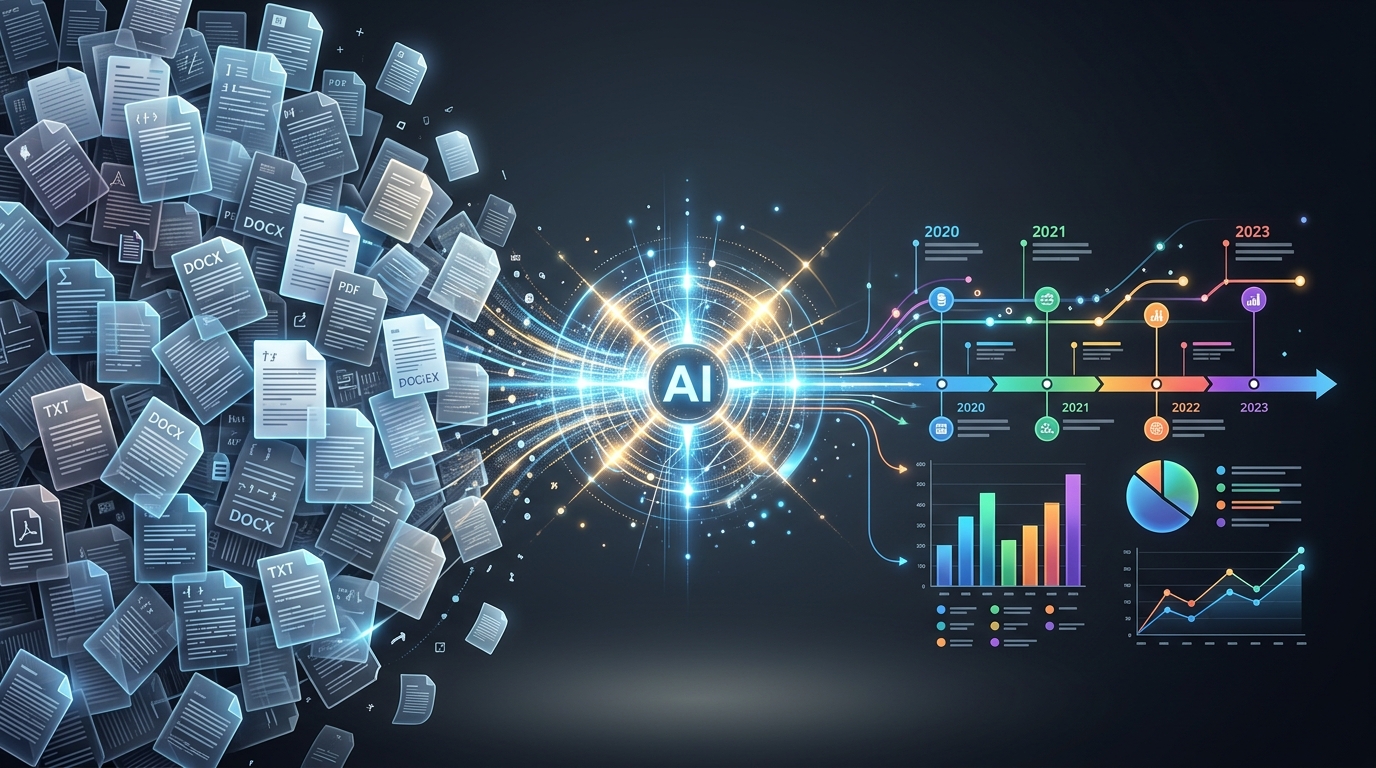
Imagine exporting a massive, five-year conversation with your best friend, expecting an artificial intelligence chat tool to instantly turn those raw text files into a meaningful narrative. You paste the log into a standard prompt box, only to receive a generic, hallucinated summary that completely misses the inside jokes and chronological context. This milestone analysis compares how generic models perform against specialized summary apps, revealing that users are heavily abandoning manual prompt engineering in favor of purpose-built, integrated architectures. As we crossed the milestone of processing over 100,000 chat exports, the data confirmed a structural shift: people want systems that natively parse their personal history, rather than forcing them to act as prompt engineers.
The End of the Chatbot Hype Phase
For the past few years, the standard user behavior for text analysis involved copying data and pasting it into whatever general interface was available. Whether they were typing chatgpt, trying gemini, or experimenting with newer models like deepseek and grok ai, the expectation was that a sufficiently advanced model could figure out any messy data dump. However, real-world retention data tells a different story.
According to the Mobil app Trendleri 2026 report published by Adjust, the initial "AI hype" phase has officially concluded. The report highlights that global consumer app spending increased by 10.6% to $167 billion in 2025, with overall app sessions rising by 7%. Crucially, the researchers noted that growth in 2026 depends heavily on operational discipline—specifically, the end-to-end integration of AI for segmentation, insights, and optimization, rather than relying on fragmented, standalone tools. Users no longer want a disconnected tool where they have to do the heavy lifting; they expect the application to manage the entire workflow natively.
In practice designing location-based services and family tracking apps, I've observed this exact behavioral shift. When users handle deeply personal data—whether it's location coordinates or private messages—they strongly prefer closed-loop, specialized environments over pasting their lives into a public web interface. They want a tailored experience that respects the format of their data.
Comparing the Two Approaches: Do-It-Yourself vs. Purpose-Built
To understand why this shift is happening, we need to compare the manual approach of using a standard ai chatbot against a dedicated recap workflow like Wrapped AI Chat Analysis Recap. If you want a structured narrative of your relationship dynamics, Wrapped AI's processing engine is designed for that specific outcome, bypassing the common errors of general models.
Approach A: The Generic AI Prompt
When a user attempts to process a large file using a standard gpt chat or similar web interface, they immediately hit friction. Message logs exported from platforms like whatsapp web or whatsapp messenger contain timestamps, system messages, and media placeholders that confuse general language models.
- Token Limits: Most standard models cap the amount of text you can input. A year of daily messaging easily exceeds these limits, forcing the user to manually slice their text into chunks.
- Context Fragmentation: Because the text is sliced, the model loses the overarching timeline. It might think an argument resolved in March is still ongoing in December.
- Hallucinations: Faced with messy data, general tools frequently invent context or merge two different people into one persona.
We see users constantly searching for workarounds, typing queries like wchat gpt, chat gp t, or even misspelled variants like char gbt and gbt char, hoping to find a specific prompt template that will fix their messy output. But the flaw isn't the prompt; it's the architecture.
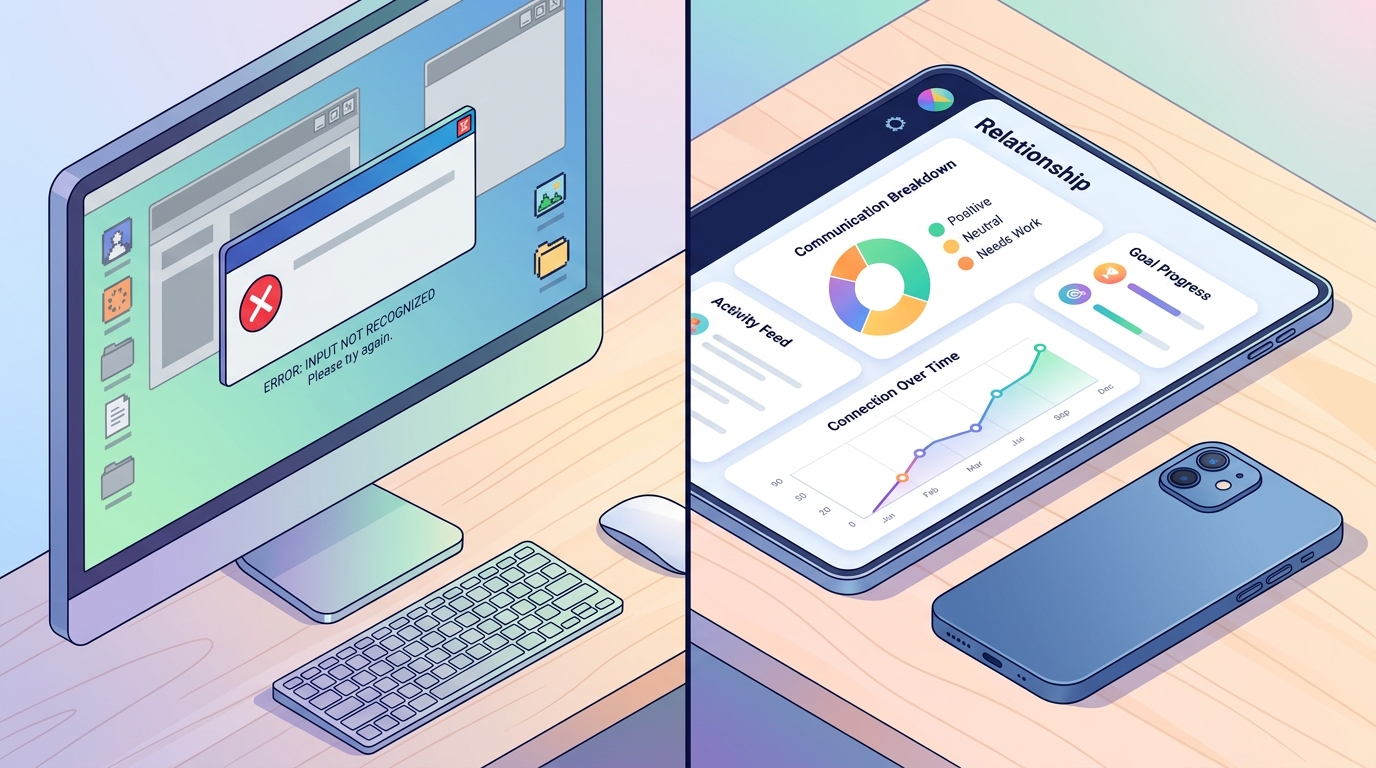
Approach B: The Specialized Pipeline
Contrast this with a dedicated analysis app. By integrating the AI specifically for messenger log structures, the friction disappears.
- Native Parsing: The tool recognizes timestamps, speaker labels, and standard messenger formatting automatically.
- Deep Segmentation: Instead of hitting token limits, the backend chunks the data logically (e.g., by month or major event) while maintaining a global context thread.
- Narrative Output: The end result isn't just a list of bullet points, but a structured timeline, highlight reel, or relationship profile.
When analyzing global search behavior, we notice fascinating localized intents that highlight this demand for specialization. For example, Turkish users frequently search for a specific workflow: an app (app) where they can take their whatsapp chat (chat) logs, and by yükleyerek (uploading) their geçmişini (history), instantly generate eğlenceli (fun) özetler (summaries). They are actively seeking precise analysisler (analyses), needing a system yapan (doing) the contextual work securely, recognizing that a dedicated app (uygulamadır) outperforms a blank prompt.
Privacy, Trust, and Opt-In Behavior
Another major factor driving users away from generic web interfaces toward specialized apps is data control. Uploading years of personal history to a broad ai training pool makes many users uncomfortable. Dedicated apps that process data locally or immediately delete it post-analysis offer a clearer privacy contract.
The 2026 Adjust report provides hard evidence that users are willing to trust apps when this contract is clear. The data shows that iOS App Tracking Transparency (ATT) opt-in rates rose from 35% in Q1 2025 to 38% in Q1 2026. This upward trend suggests that when users understand the value exchange—and trust the platform—they are increasingly comfortable sharing necessary permissions. People are not inherently opposed to data processing; they are opposed to opaque data processing.
This aligns closely with what Naz Ertürk discussed regarding artificial intelligence chat habits, noting that users strongly prefer environments where the boundaries of data usage are explicitly defined. Whether they are moving away from unauthorized modified clients (often searched via terms like gb whatsapp download) or official tools like a whatsapp business download, the priority remains strict control over the exported text.
Why Context Matters More Than Raw Power
It is easy to assume that the most famous models—like chats gpt, chàt gpt, or standard chat gpt variants—are inherently the best at everything. They possess massive parameters and broad knowledge. But personal messaging isn't about broad knowledge; it's about hyper-local, deep context.
Your chat history is an intimate dataset. It has its own vocabulary, pacing, and emotional cadence. A generic chat model approaches this data like a textbook, extracting dry facts. A purpose-built app approaches the data like a biographer, looking for behavioral patterns, most active hours, frequent emojis, and communication styles. As Naz Ertürk pointed out in her comparison of generic tools versus recap apps, the best option depends entirely on whether you want a quick factual answer or a deeply personalized narrative.

The Future of Personal Data Analysis
Reaching 100,000 processed exports has fundamentally validated our approach at Dynapps LTD. The era of forcing users to figure out complex prompts to extract value from their own data is ending.
When someone attempts to summarize a massive file using cha t gpt or chatgtp, they are essentially using a Swiss Army knife to build a house. It functions, but it is highly inefficient and frustrating. The mobile app economy is shifting toward integrated solutions that handle the technical complexity behind the scenes, presenting the user only with the polished, final insight. For personal relationship analysis and export summaries, specialized tools have permanently changed the baseline expectation.